wordwings
2025
48 hours

The Challenge
Many dyslexic readers struggle with fluency, pronunciation, and visual clarity—making reading feel frustrating rather than rewarding.
Difficulty with pronunciation
Visual crowding and text confusion
Low confidence while reading aloud
Inconsistent reading habits
Existing solutions often prioritize entertainment or clinical exercises over supportive learning.
How might we create an AI-powered reading experience that builds confidence without increasing cognitive load?
Research Snapshot
Given the hackathon timeline, research focused on high-impact accessibility principles that could directly influence reading comfort.
Dyslexia-friendly typography
Optimal text size and spacing
Low-stress color palettes
Clear, distraction-free layouts
These insights shaped every design decision throughout the product.
Turning a Constraint into the Core Experience
The hackathon required every team to integrate AI voice APIs.
Rather than treating voice as an additional feature, I made it the foundation of the learning experience.
Guided "Read Together" sessions
AI-powered pronunciation feedback
Safe, repeatable reading practice
Accessibility Decisions
1. Calm, Low-Cognitive Interface
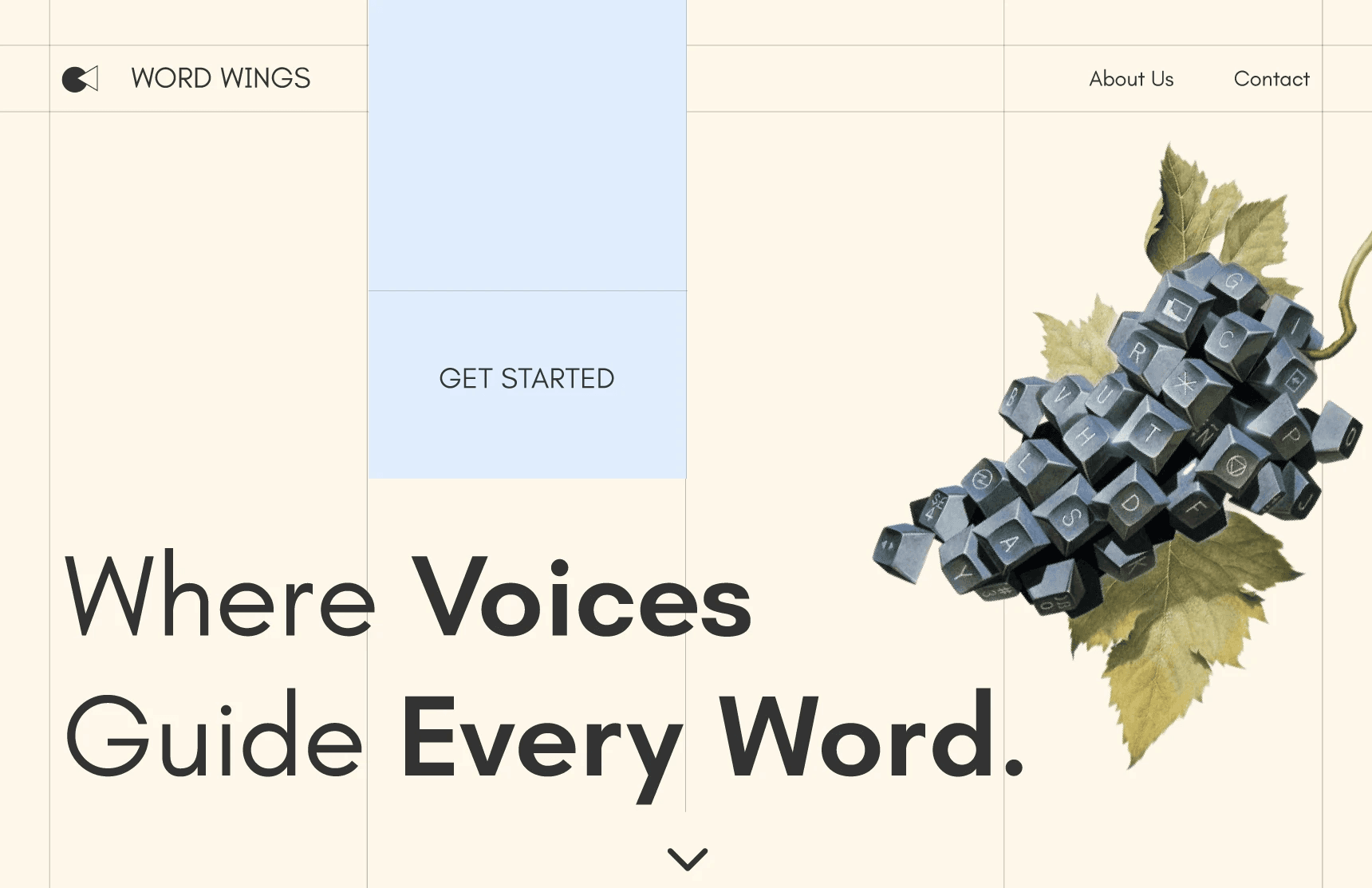
The interface was designed to reduce visual stress and help users stay focused while reading.
Clear typographic hierarchy
Generous spacing
Neutral color palette
Predictable layout structure
Interactive cards highlight on hover to improve discoverability without adding unnecessary distractions.
2. Structured Reading Journey
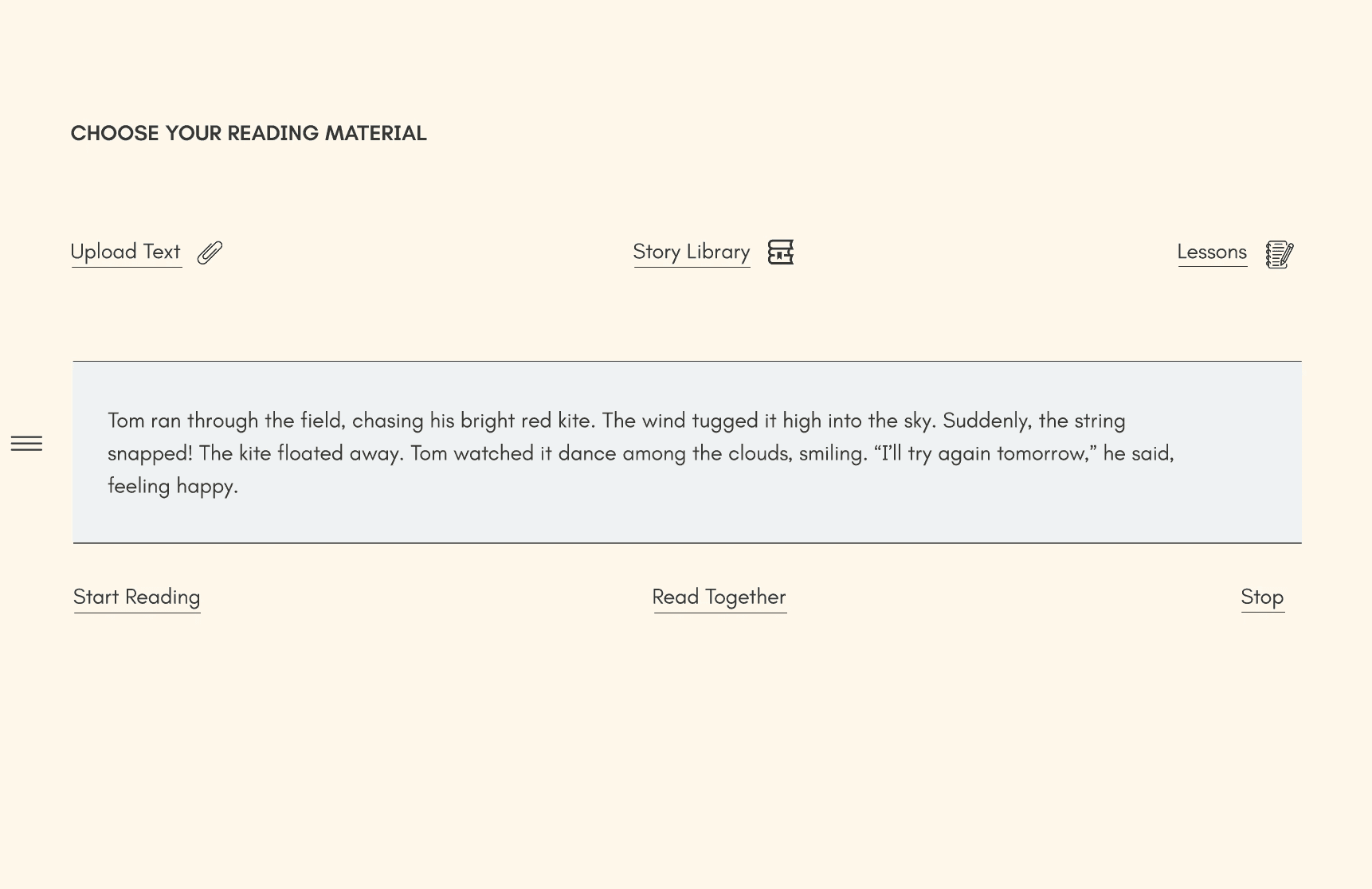
Reading was organized into clear learning paths instead of overwhelming users with choices.
Upload personal reading material
Browse a curated story library
Follow structured lessons
Flexible reading modes
3. AI-Assisted Pronunciation Practice
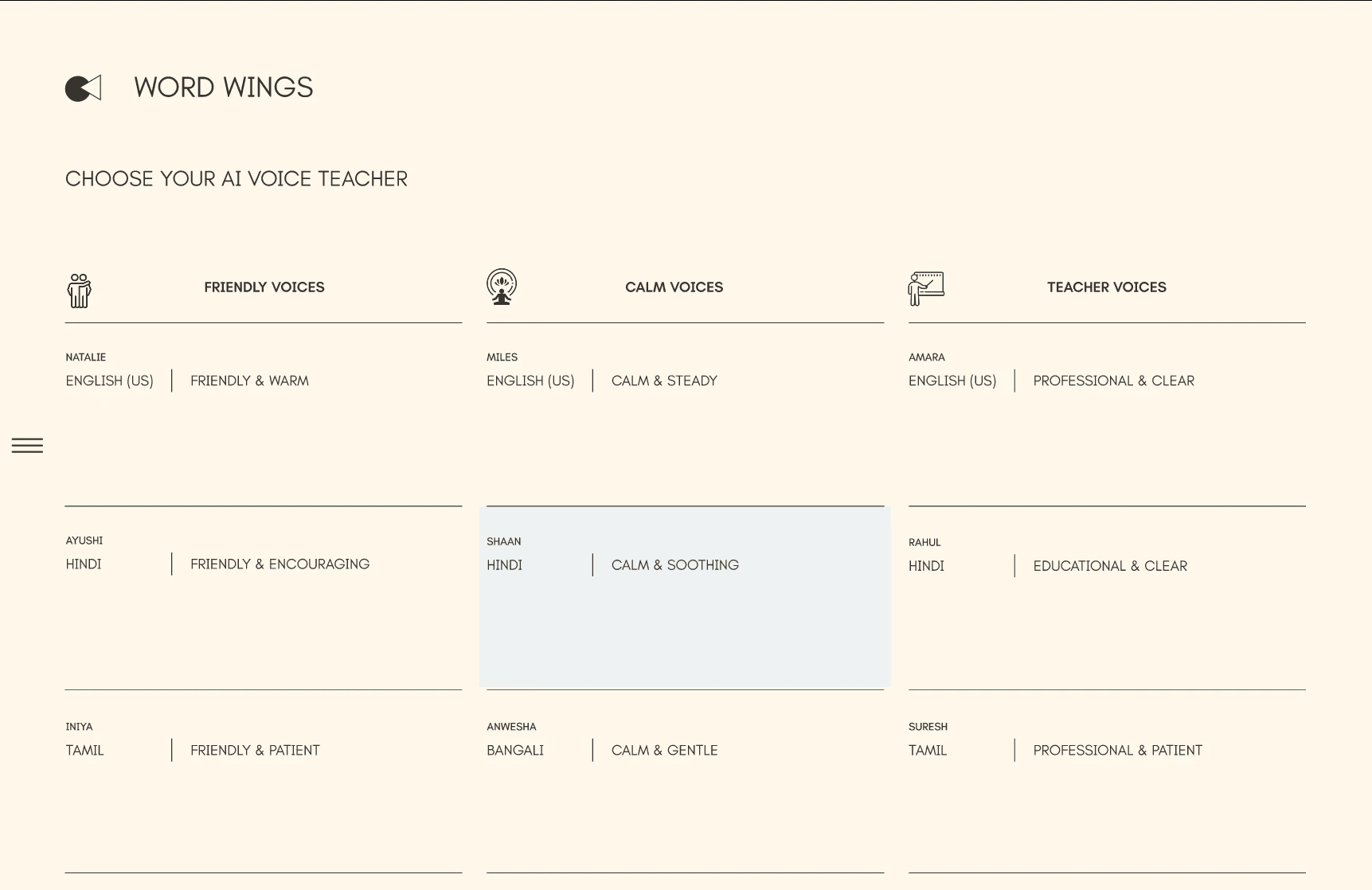
AI created a safe feedback loop that encouraged practice without fear of making mistakes.
Listen → Repeat → Feedback
Supports pronunciation development
Removes social pressure
4. Reinforcement Without Distraction
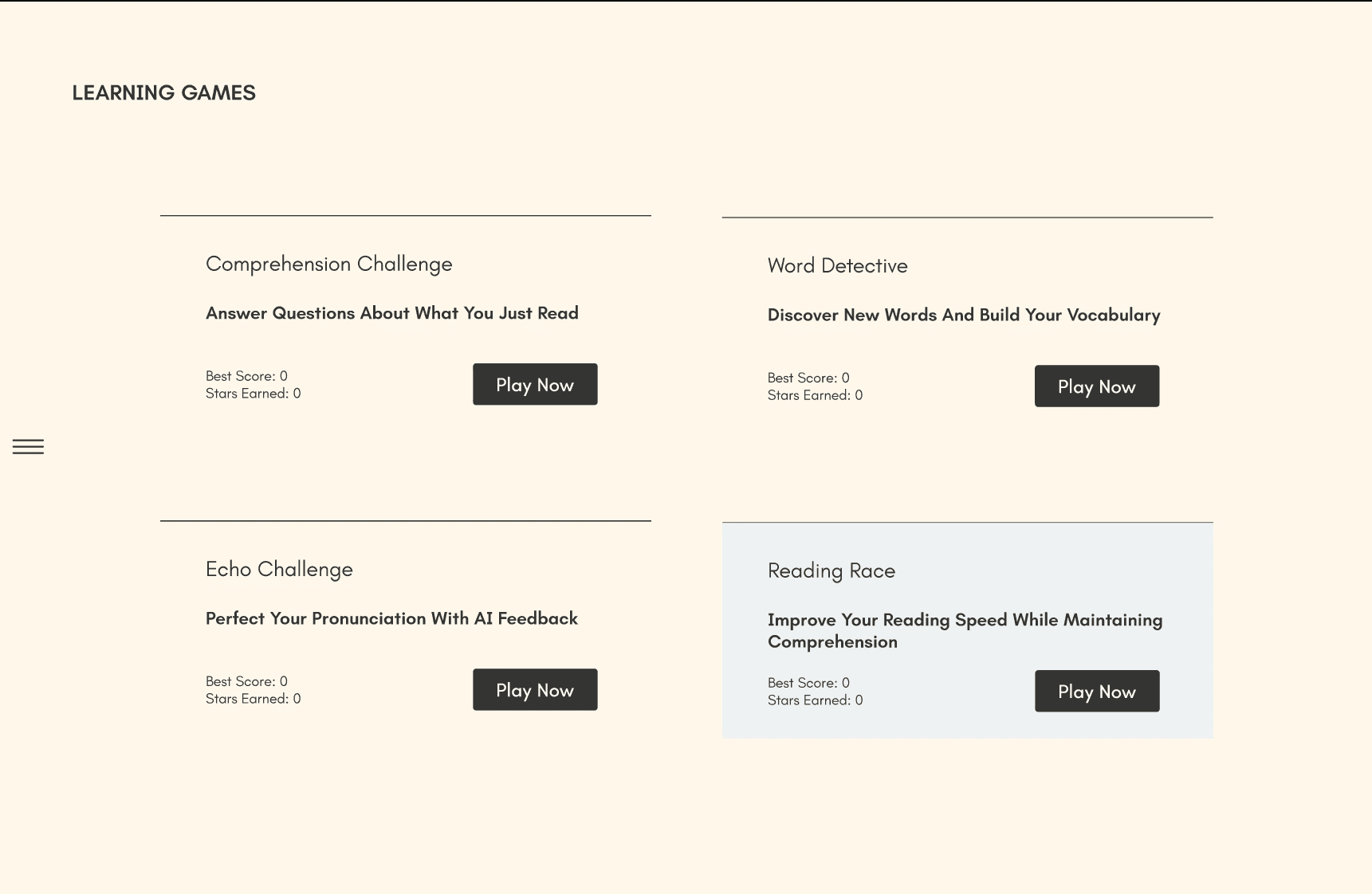
Short learning activities reinforce progress while keeping reading as the primary focus.
Comprehension Challenge
Word Detective
Reading Race
Supports repetition without excessive gamification
5. Progress That Builds Confidence
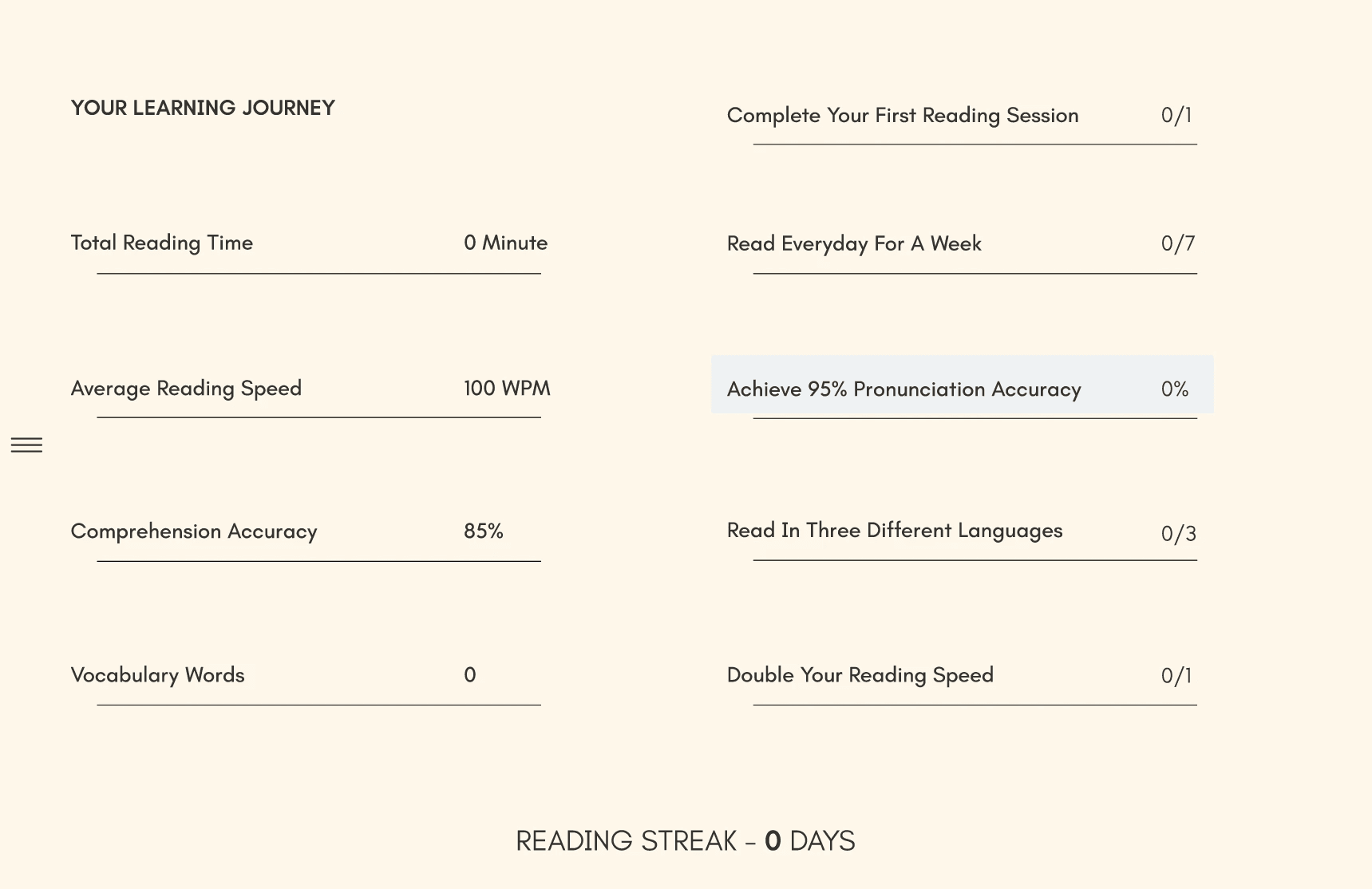
Progress tracking was designed to motivate consistency rather than competition.
Reading streaks
Pronunciation accuracy
Reading speed (WPM)
Comprehension progress
Vocabulary growth
Visible progress helps reinforce positive reading habits over time.
Constraints & Trade-offs
As a 48-hour hackathon project, decisions were driven by impact and feasibility.
Trade-offs included:
Prioritized core reading flows over secondary features
Relied on established accessibility guidelines instead of user testing
Focused on demonstrating the voice-first experience rather than building a production-ready platform
Future Opportunities
With additional time, the next steps would focus on validating the experience with real users.
Conduct usability testing with dyslexic learners
Measure pronunciation improvement over time
Evaluate typography and spacing variations
Balance gamification against cognitive load
Track long-term reading habits and retention
Success would be measured through improvements in reading fluency, pronunciation accuracy, and weekly engagement.
Outcome
Word Wings demonstrates how AI voice interaction can make reading more supportive, accessible, and confidence-building.
Voice-first reading experience
Accessibility-driven design
AI-assisted pronunciation practice
Progress-focused habit formation
The experience prioritizes clarity, confidence, and consistency over entertainment-driven engagement.